
Acropolis Tickets
Compared & Reviewed
Skip-the-line tickets, guided tours & combo passes from trusted providers. Book online with free cancellation and instant mobile tickets.

Best Acropolis Tickets for 2026
All tickets from verified, top-rated providers – compared in one place.

Acropolis & Parthenon Tickets with Audio Guide
Skip the ticket lines and explore at your own pace with a multilingual audio guide covering every major monument on the hill.

Acropolis & Parthenon Guided Tours with Entry Tickets
Explore the Acropolis with an expert guide who brings ancient history to life. Small groups, headsets for clear audio, and plenty of time for questions and photos.
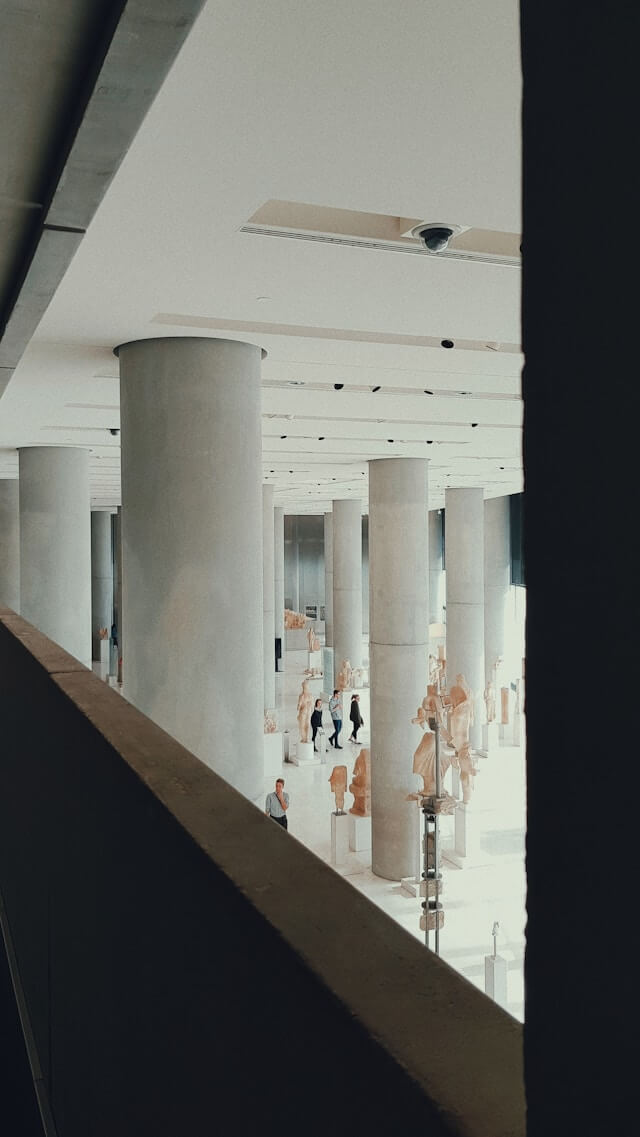
Acropolis + Acropolis Museum Tickets with Audio Guide
The two essential Athens experiences in one booking. Timed entry to the hilltop and skip-the-line Museum admission, both with audio guides.

Athens Multipass: Acropolis + 5 Archaeological Sites with Audio Guide
The best-value pass in Athens – one ticket covers the Acropolis and five major archaeological sites, all with multilingual audio guides. Valid for 3 days after first entry.
Find Your Best Acropolis Ticket
Quick side-by-side comparison of all ticket types.
| Ticket Type | Best For | Duration | Guide | Includes | From |
|---|---|---|---|---|---|
| Entry Ticket | Self-paced | Flexible | Audio (5 langs) | Acropolis + all monuments | 36 € |
| Entry + Museum | Both sites | Flexible | Audio (6 langs) | Acropolis + Museum | 70 € |
| Guided Tour | Expert insights | 2-10 hrs | Live guide | Acropolis + guide + entry | 47 € |
| Guided + Museum | Full experience | 3.5 hrs | English guide | Acropolis + Museum + guide | 47 € |
| Athens Multipass | Multiple sites | Flexible | Audio (5 langs) | Acropolis + 5 extra sites | 36 € |
The Acropolis of Athens – A Complete Visitor’s Guide
The Acropolis of Athens is not just Greece’s most famous landmark – it is one of the most important archaeological sites in the world. Strategically positioned on a natural limestone plateau 150 meters above the city, this ancient citadel overlooks Athens and has been continuously occupied for over 3,000 years. Dedicated to the goddess Athena, the patron deity of Athens, the Acropolis is a symbol of the city’s cultural and religious identity.
A UNESCO World Heritage Site since 1987, it stands as a lasting testament to the ideals of democracy, philosophy, art, and architecture that shaped Western civilization. Among its significant monuments is the Sanctuary of Dionysus Eleuthereus, located on the south slope, which served as a major religious and cultural site dedicated to the god Dionysus. The north side of the Acropolis is notable for its accessibility features, offering a designated entrance and wheelchair access for visitors. This guide covers everything you need to know before visiting. For the full story behind the monuments, explore the history of the Acropolis.
Acropolis Ticket Types Explained
Choosing the right ticket can make or break your Acropolis experience. Here’s a breakdown of each option.
Once you exit the Acropolis archaeological site, you cannot re-enter with the same ticket or admission ticket. Plan your visit accordingly, as re-entry is not permitted with the same ticket. During your visit, you are required to follow the marked routes throughout the site for your safety, accessibility, and to help preserve the monuments.
Standard Entry Ticket with Audio Guide
The most popular choice. A timed, skip-the-line e-ticket that grants access to the entire archaeological site: the Parthenon, Erechtheion, Temple of Athena Nike, Propylaea, Theatre of Dionysus, and Odeon of Herodes Atticus. Most tickets include a self-guided audio tour in 5+ languages.
Guided Tour with Entry Ticket
Led by licensed archaeologists or historians, these tours bring the ruins to life with stories and context that no audio guide can match. Most run 2 hours, in small groups of 15-20, with wireless headsets.
Combo Ticket: Acropolis + Museum
The Acropolis Museum houses the original sculptures, friezes, and artifacts from the monuments above. A combo ticket gives you skip-the-line entry to both sites – the best option for a comprehensive half-day experience.
Athens Multipass
Covers the Acropolis plus five additional sites: Ancient Agora, Roman Agora, Temple of Olympian Zeus, Aristotle’s School, and Panathenaic Stadium. At 36 €, it’s often the same price as a standard Acropolis ticket – exceptional value.

Acropolis Ticket Prices in 2026
Prices vary by season, ticket type, and provider:
| Standard entry (audio guide) | 36 € – 45 € |
| Combo: Acropolis + Museum | 58 € – 72 € |
| Guided tour (2 hrs) | 45 € – 65 € |
| Guided tour + Museum | 47 € – 95 € |
| Athens Multipass (6 sites) | 36 € |
| Private guided tour | 150 € – 250 € |
Note: Admission tickets are generally non-refundable, but some providers offer a full refund if you cancel your reservation at least 24 hours in advance. Always check the specific cancellation policy before booking.
Winter prices (November–March) are significantly lower – standard tickets drop to ~20 €. The first Sunday of each month in winter offers free entry.
- EU citizens under 25 years old can enter the Acropolis for free with valid identification.
- Non-EU students aged 18–25 are eligible for a reduced admission fee, typically 50% off the standard price.
- Free admission applies to all children and minors up to 18 years old, regardless of nationality.
- Group tickets for the Acropolis Museum must be booked electronically through licensed agencies or via the official B2B portal of the Ministry of Culture.
What to Expect During Your Visit
Here’s what you’ll encounter, step by step.
As you begin your visit, please avoid entering restricted areas and always follow special signage and marked routes to ensure both your safety and the preservation of the Acropolis. Special signage guides visitors to key areas, including accessible routes and exits such as the south exit and Beule Gate, helping you navigate the site efficiently. Be careful whilst moving through high risk zones, especially on slippery marble paths and uneven terrain – these areas require extra caution.
For visitors with diminished abilities, the North Slope of the Acropolis is wheelchair accessible via a specially designed entrance-exit located north of the main entrance. The South Slope can be accessed by visitors with mobility impairments through the main entrance at the junction of Dionysiou Areopagitou and Thrasyllou streets, which is also wheelchair accessible. The elevator is available to assist not only visitors with diminished abilities but also parents attending with two or more infants.
Please note that opening hours apply as posted, with a gradual reduction in hours during the autumn months. Always check the current opening hours before your visit to ensure you arrive within the designated time frames.
The Approach and Security
From either entrance, you’ll walk uphill on a paved path lined with olive trees. At the gate, everyone passes through airport-style security. Off-peak: ~10 minutes. Peak season: 30–45 minutes.

The Propylaea
The monumental marble gateway, built between 437 and 432 BCE under architect Mnesicles. Its massive Doric and Ionic columns framed views of the Parthenon above – one of antiquity’s most dramatic architectural sequences.
The Temple of Athena Nike
Perched on a bastion overlooking the city, this small but exquisite temple was completed around 420 BCE to celebrate Athens’ military victories. Its dramatic position makes it one of the most photographed monuments on the hill.

The Parthenon
The defining monument of the Acropolis. Constructed between 447 and 432 BCE under sculptor Phidias, it was dedicated to Athena Parthenos. The temple once housed a gold-and-ivory statue nearly 12 meters tall.
The columns aren’t perfectly straight – they lean inward and bulge in the middle (entasis) to counteract optical illusions. The floor curves upward by 6 centimeters. These corrections were executed with a precision that still amazes engineers 2,500 years later.
The Parthenon has served as a Greek temple, Christian church, Ottoman mosque, and ammunition dump – which exploded in 1687, causing the damage visible today.

The Erechtheion and the Caryatids
Built on multiple levels to accommodate the uneven bedrock, the Erechtheion housed the cult of Athena Polias and marked the mythical spot where Athena and Poseidon competed for the city’s patronage.
Its most famous feature: the Porch of the Caryatids – six sculpted female figures serving as columns. The originals are in the Acropolis Museum; replicas stand on-site.
The South Slope: Theaters
The Acropolis Museum
Opened in 2009 and designed by Bernard Tschumi, the museum sits at the base of the hill. Its glass-floored building was built over an active excavation – you can see ancient ruins beneath your feet.
The top-floor Parthenon Gallery is oriented to align with the temple itself, with floor-to-ceiling windows framing a direct view of the Parthenon on the hill above.
A Brief History of the Acropolis
From prehistoric fortress to global icon – 5,000 years in one timeline.
Things to Know Before You Buy
Skip-the-Line – What It Actually Means
All online tickets include timed entry – you bypass the ticket queue, saving 30-60 minutes in peak season. However, everyone goes through the same security checkpoint.
Audio Guide vs. Live Guide
Daily Visitor Cap
Since September 2023, entry is capped at 20,000 visitors per day. During peak months (June-August), morning slots sell out weeks in advance. Booking ahead is essentially mandatory in peak season.
Reduced and Free Tickets
EU citizens aged 6-25 and ISIC cardholders get reduced rates. Children under 5 enter free. From November to March, the first Sunday of each month offers free entry.
Plan Your Visit to the Acropolis
April 1 – September 15: 8:00 AM – 7:30 PM
September 16 – 30: 8:00 AM – 7:00 PM
October 1 – 15: 8:00 AM – 6:30 PM
October 16 – 31: 8:00 AM – 6:00 PM
November 1 – March 31: 8:00 AM – 5:00 PM
Last entry: 30 min before closing. Closed: Jan 1, Mar 25, Easter, May 1, Dec 25-26.
By Metro: Acropoli (Line 2) or Monastiraki (Lines 1 & 3) – 5-10 min walk.
Main entrance: West slope via Dionysiou Areopagitou Street.
Side entrance: Southeast, opposite Acropolis Museum – often shorter lines.
By bus: Lines 230, 035, 040. Hop-on hop-off stops at Acropolis Museum.
Time of day: 8:00 AM at opening or after 5:00 PM – fewer crowds, better light.
Season: April – mid June and mid September – October for ideal conditions.
Avoid: Weekends 10 AM – 2 PM, especially July-August (35°C+).
Main (west): Classic approach through the Propylaea. Iconic but busier.
Side (southeast): Opposite the Museum, near Theatre of Dionysus. Shorter waits.
Bring water – refill stations available, no cafés on-site.
Wear shoes with good grip. Marble paths are slippery, especially after rain.
Budget 2-3 hours for the hill + 1.5-2 hours for the museum.
Photography allowed everywhere. Drones need advance permission.