
Acropolis Opening Hours
2026 Seasonal Schedule & Visit Times
Full seasonal timetable for the Athens Acropolis – summer & winter gate times, last-entry deadlines, holiday closures, and crowd-beating strategies for every month of the year.

Acropolis Hours at a Glance – 2026
Gates swing open at 8:00 AM every day. Only the closing hour changes between seasons.
| Date Range | Opens | Closes | Season |
|---|---|---|---|
| April 1 – August 31 | 8:00 AM | 8:00 PM | Peak Summer |
| September 1 – 15 | 8:00 AM | 7:30 PM | Early Autumn |
| September 16 – 30 | 8:00 AM | 7:00 PM | Autumn |
| October 1 – 15 | 8:00 AM | 6:30 PM | Late Autumn |
| October 16 – 31 | 8:00 AM | 6:00 PM | Late Autumn |
| November 1 – March 31 | 8:00 AM | 5:00 PM | Winter |
Secure Your Time Slot – Acropolis Tickets
Timed-entry passes from trusted providers. Pick your window and guarantee admission during your preferred hours.

Acropolis & Parthenon Tickets with Audio Guide
Reserve a specific hour, walk past the ticket counter, and roam the hilltop freely with a downloadable narration in five languages that works without mobile data.

Acropolis & Parthenon Guided Tours with Entry Tickets
A licensed historian walks you through every major ruin, sharing myths and construction secrets you won’t find on any plaque. Compact group sizes and personal receiver sets keep every word crisp.
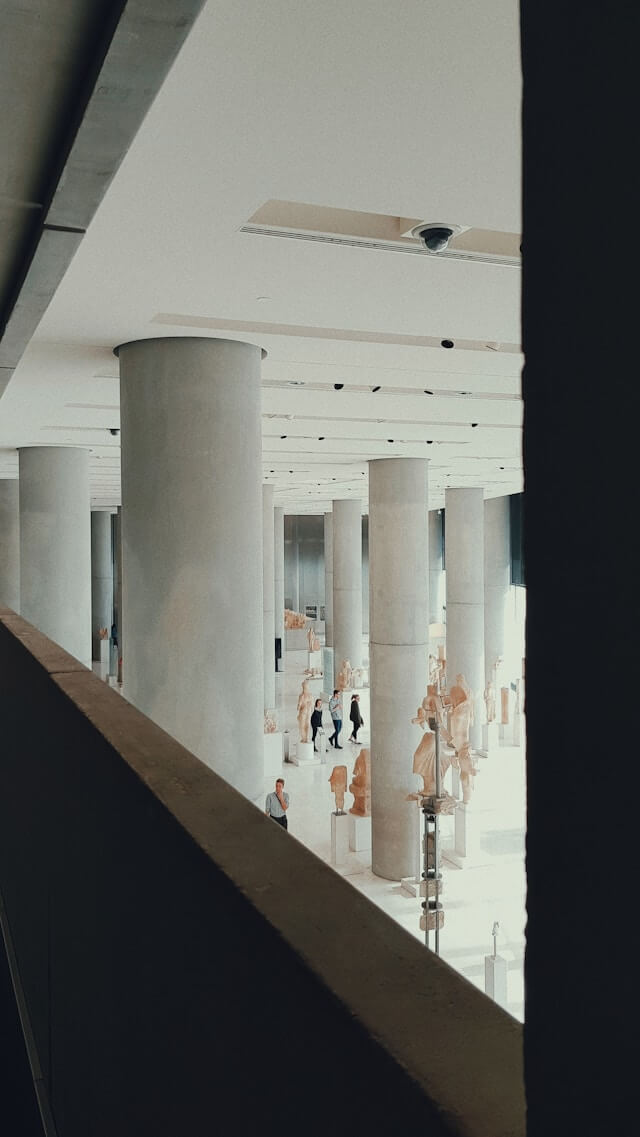
Acropolis + Acropolis Museum Tickets with Audio Guide
Pair the hilltop ruins with the glass-floored gallery below in a single reservation. Narrated walkthroughs for both locations are bundled in, letting you connect the originals upstairs with the sculptures they once adorned.

Athens Multipass: Acropolis + 5 Archaeological Sites with Audio Guide
One pass unlocks six of Athens’ headline ruins across three full days. Ideal if you plan to stay more than 24 hours and want to roam the Ancient Agora, Roman Forum, Zeus’ Temple, Aristotle’s Lyceum, and the Panathenaic Stadium alongside the Acropolis itself.
€98
Check availability
When the Acropolis Is Closed in 2026
The archaeological site welcomes visitors nearly 360 days a year. These six national holidays are the exceptions.
When Is the Ideal Time to Visit the Acropolis?
Timing shapes every part of your experience – from how long you queue at security to how comfortable you feel on a shadeless limestone plateau in the Attic sun. Athens regularly exceeds 35 °C in July and August, and with the 20,000-visitor daily ceiling, the most sought-after morning windows sell out fast.
Dawn Risers vs. Golden-Hour Seekers
Best Months to Plan Around
Late April through mid-June and the second half of September into October strike the sweet spot: pleasant 22–28 °C temperatures, long operating windows, and noticeably lighter foot traffic than the July–August crush. Winter is the quietest season – fewer tourists, discounted admission, and occasional free-entry Sundays – though the 5:00 PM closing can feel abrupt if you arrive late.
Saturdays and Sundays between 10:00 AM and 2:00 PM consistently draw the densest crowds year-round. Shifting your visit to a Tuesday or Wednesday morning can cut your security wait in half and give you noticeably more breathing room around the Parthenon.
Understanding the Acropolis Seasonal Timetable
Most tourist attractions lock in a single set of hours and leave it at that. The Acropolis takes a different approach: it calibrates its closing time to the available daylight over the Saronic Gulf. The opening hour – 8:00 AM – is the one constant across all twelve months. Everything else flexes.
During the five-month stretch from April through August, Athens enjoys as many as fifteen hours of sunshine, and the archaeological site capitalises on that with a generous twelve-hour operating day ending at 8:00 PM. Once the autumnal equinox passes, sunsets creep earlier, and the Ministry of Culture responds in measured half-hour increments: 7:30 PM in early September, then 7:00, 6:30, and finally 6:00 PM by late October. November through March settles into a fixed winter rhythm of 8:00 AM to 5:00 PM.
Regardless of the posted closing hour, the security checkpoint stops scanning visitors exactly half an hour beforehand. If today’s gate shuts at 7:00 PM, your ticket will be rejected at 6:31 PM. There is no flexibility on this – plan accordingly.
Summer Hours vs. Winter Hours – A Practical Breakdown
Three hours separate the longest and shortest operating days on the calendar. That gap has real consequences for how you structure your time in Athens.
The Long Days (April – August)
A full twelve-hour window from 8:00 AM to 8:00 PM means you can split your day creatively. Hit the summit at dawn, retreat to the shaded lanes of Pláka for a long lunch, then return to the Acropolis Museum – or even climb back up – in the mellow evening light. The downside is obvious: searing midday heat (routinely 38 °C+ on the exposed rock) and the year’s heaviest visitor numbers.
The Short Days (November – March)
Nine hours of access sounds constraining, but winter compensates with tangible perks: far fewer tourists, significantly reduced ticket prices (standard entry often drops toward €20), and a quality of light – crisp, low-angled, almost cinematic – that makes the marble seem to radiate from within. Add the first-Sunday-of-the-month free admission policy, and off-season visits become genuinely compelling.
September & October – The Tapered Transition
No other period in the calendar requires as much attention to exact dates. Rather than flipping a single switch from summer to winter mode, the Acropolis ratchets its schedule down in four discrete steps:
| 1 – 15 September | Gate closes at 7:30 PM |
| 16 – 30 September | Gate closes at 7:00 PM |
| 1 – 15 October | Gate closes at 6:30 PM |
| 16 – 31 October | Gate closes at 6:00 PM |
Ironically, these transition weeks deliver some of the finest visiting conditions all year. Daytime highs settle into the mid-20s°C, cruise-liner itineraries thin out, and the Attic atmosphere acquires a translucent clarity that makes distant views toward Aegina and the Peloponnese startlingly sharp. If you have any latitude in your travel planning, the last week of September or the first week of October is hard to beat.
The Daily 20,000-Visitor Ceiling
Introduced in September 2023 to safeguard both the monuments and the quality of the experience, the cap distributes visitors across fixed one-hour entry slots. Once a slot reaches capacity, it vanishes from the booking system – no exceptions, no overrides.

What “Skip-the-Line” Actually Gets You
The phrase appears on every online listing, and it does deliver on its promise – partially. Your e-ticket lets you bypass the cash-register queue at the entrance, which during peak season can stretch for 30 to 60 minutes of standing in direct sun.
What it does not bypass is the mandatory security screening. Every visitor – ticket holder, guided-tour participant, VIP, or otherwise – files through the same airport-style checkpoint. During high-traffic summer mornings the security line alone can add 15 to 30 minutes. In the off-season or after 4:00 PM, it’s typically under five minutes.
Acropolis Museum – A Separate Timetable
The Bernard Tschumi-designed gallery at the foot of the hill keeps its own independent schedule. While the archaeological site overhead might close as early as 5:00 PM in the depths of winter, the Museum typically remains open until 8:00 PM – and until 10:00 PM on Fridays.
A combo pass covering both venues saves money and eliminates a second queue, but double-check each timetable before you go so you don’t show up at one after the other has already locked its doors.
How Much Time Should You Set Aside?
There’s no single right answer, but these benchmarks reflect what most visitors actually spend:
Reaching the Acropolis Without Delays
With timed-entry windows now the norm, showing up late can mean forfeiting your booking entirely. Build in a buffer and know your route.
Metro
Acropoli station (Line 2, red) places you roughly five minutes on foot from the southeast gate. Monastiráki station (Lines 1 and 3) is about ten minutes’ walk to the western entrance via pedestrianised streets. Both stations are air-conditioned and lift-equipped.
Bus & Hop-On Hop-Off
City lines 230, 035, and 040 all serve nearby stops. Open-top tourist coaches halt beside the Acropolis Museum, a convenient drop-off for anyone holding a combo pass who wants to enter through the southeast gate.
On Foot from the Centre
The tree-lined pedestrian boulevard of Dionysiou Areopagitou – often called the most beautiful walkway in Athens – leads gently uphill from the Temple of Olympian Zeus to the western gate. Budget fifteen minutes at a comfortable pace and enjoy the street musicians along the way.
Accessibility & Discounted Admission
A mechanical lift on the northern face of the rock provides step-free access all the way to the summit. Paved walkways link the principal monuments on top, although the terrain remains uneven in places – grippy, closed-toe footwear is sensible for everyone.
The Acropolis Museum is fully equipped with ramps, lifts, and adapted facilities on every level.
Who Pays Less – or Nothing?
| EU nationals aged 6 – 25 | Reduced price (valid national ID required) |
| Holders of an ISIC student card | Reduced price |
| Children aged 0 – 5 | Complimentary entry |
| Visitors with a disability + one attendant | Complimentary entry (documentation required) |
| First Sunday, November – March | Open to all at no charge |
What You Cannot Carry Through Security
Acropolis Visitor Cheat Sheet
Apr 1 – Aug 31: Open 8 AM, close 8 PM – full summer window.
Sep 1 – 15: Close moves to 7:30 PM as evenings shorten.
Sep 16 – 30: Close shifts to 7 PM.
Oct 1 – 15: Close at 6:30 PM.
Oct 16 – 31: Close at 6 PM – final autumn step.
Nov 1 – Mar 31: Winter rhythm, close at 5 PM.
Ticket scanners deactivate 30 minutes ahead of each closing time – arrive earlier.
Western (main): The grand approach ascending through the Propylaea. Historically atmospheric but draws the majority of foot traffic.
Southeastern (side): Located across from the Museum, adjacent to the Theatre of Dionysus. Typically a quicker passage through security, with a slightly steeper first section of path.
Either gate accepts the same ticket. Choose based on which direction you’re arriving from – or which has the shorter visible queue.
Line 2 metro: Exit at Acropoli – roughly 300 metres to the southeastern gate.
Lines 1 / 3 metro: Exit at Monastiráki – roughly 600 metres to the western gate.
City buses: Routes 230, 035, and 040 all stop within a few hundred metres.
Taxi or app-based ride: Ask for drop-off on Dionysiou Areopagitou (west) or Makrigiánni Street (southeast). No on-site parking exists.
Refillable water bottle – fountains are available inside but no food vendors operate on the hill.
Wide-brim hat and high-SPF sunscreen – the summit is entirely exposed with zero natural shade.
Non-slip shoes with closed toes – centuries of foot traffic have polished the marble paths mirror-smooth, especially treacherous when damp.
Compact bag only – anything larger than a standard daypack will be held at the free cloakroom near security.
Smartphones, pocket cameras, and mirrorless bodies with attached lenses are unrestricted everywhere on-site.
Tripods taller than 30 cm and professional-grade lighting rigs require a written permit from the Ministry of Culture, applied for in advance.
Drone flights of any kind demand separate ministry authorisation – allow several weeks for processing.
Prime shooting hours: the first 60 minutes after gates open (clean eastern light on the Propylaea) and the last 90 minutes before closure (deep golden wash across the Parthenon’s west face).